Sustainability
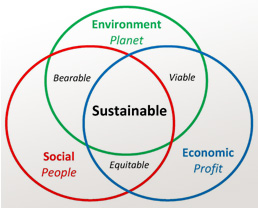
Sustainability is a combination of minimising environmental impacts and economic costs to achieve the required social performance.
This has gone beyond an informal desire to be ‘green’ and is now well documented with an increasing number of International and European Standards, where for building the key standard is:
- BS EN 15643-1: 2010 Sustainability of construction works — Sustainability assessment of buildings. Part 1: General framework
A European standard to cover infrastructure will follow in the near future.
BRMCA is a founder member of the Concrete Industry’s Sustainability Strategy. Details of the Concrete Sustainable Strategy and latest performance against targets for UK Concrete are available at: www.sustainableconcrete.org.uk
Sustainability credentials of particular relevance are: responsible sourcing, waste and the use of recycled aggregates.
Responsible sourcing
All ready-mixed concrete uses locally available constituent materials, minimises environmental impacts and is resource efficient to produce the required performance. Around 94% of BRMCA concrete is accredited to the BRE Environmental Standard BES 6001.
Resource efficiency
The ready-mixed concrete Resource Efficiency Action Plan (REAP) identifies key challenges and actions that the ready-mixed concrete industry and the supply chain need to address to improve in-situ concrete construction, and the document was published in February 2014 and available for download.
Waste
There is very little waste associated with ready-mixed concrete as there is no packaging and the precise volume required can be delivered. Small amounts of returned concrete and any washout is either processed to reclaim the aggregate or left to harden for use as recycled concrete aggregate.
Recycled or secondary and aggregates
BRMCA Member Companies have the technical expertise to produce and supply concrete containing a range of secondary and recycled aggregates. Specifiers should engage with ready-mixed concrete companies to ensure that suitable material is available.
For normal applications recycled aggregates are generally only suitable as a replacement for a proportion of coarse aggregates, as using proportions of fine recycled aggregates presents a significant risk of unacceptable level of shrinkage or expansion. Consideration should be given as to whether or not the introduction of secondary and/or recycled aggregates into concrete will provide a more sustainable and environmentally sound project, as their introduction into other forms of construction material and applications may provide more viable options in both economic and environmental terms.
|
![Full Body Name ([acronym]) part of the Mineral Products Association (MPA)](/images/logo_mpa_strap.gif)
 Printable
page
Printable
page